Foreign objects in the track or damaged pulleys increase friction.
Insufficient lubrication of components or deformation of the track causes running resistance.
Wear of the hanging wheel or loose belt causes the automatic sliding door to be driven unsmoothly.
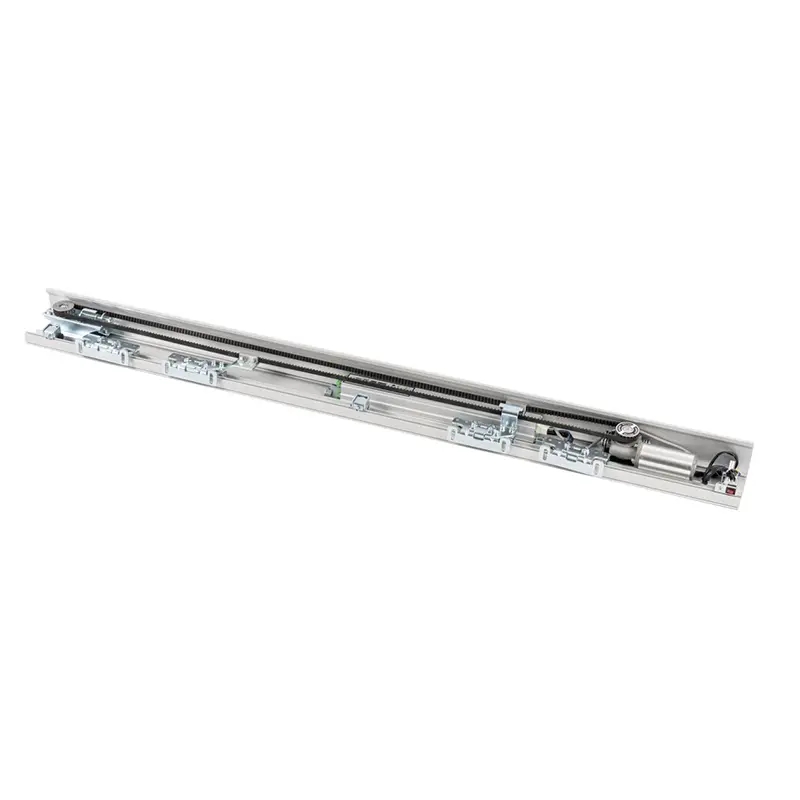
Foreign objects are stuck in the track or the sway stopper, or the mobile hanging wheel is worn, resulting in unstable operation.
The gap between the door leaf and the track is uneven, or the installation is not firm, causing the structure to loosen.
Power interruption due to motor overload, line failure or controller burnout.
Abnormal voltage fluctuation affects motor performance, or belt shedding causes transmission failure.
Incorrect controller parameter settings or loose belts affect transmission efficiency.
The friction between the door leaf and the track/floor increases, or the friction between the stop wheel and the track is abnormal.
The sensor is blocked by foreign objects, improperly installed, or the probe is damaged, resulting in induction failure.
Logic confusion caused by controller program errors or hardware damage.
The anti-pinch device is not reset after being triggered, or the door body collides with an obstacle, causing the automatic sliding door to be blocked from closing.
Magnetic sensitive switch failure, or infrared anti-collision probe damage causes misjudgment.
The track is deformed or the structure of the automatic sliding door leaf itself is deformed, resulting in uneven gaps.
Severe wear of the ground swing or sliding of the hanger roller causes positioning deviation.
Loose components, increased wear, or insufficient lubrication cause running vibration.
Foreign objects are embedded between the track and the roller, or the friction surface is rough.